Kitchen Sink Clogs: What to Try and What to Avoid Safely
A plain-English plumber's guide to kitchen sink clogs: safe DIY steps, what not to pour down the drain, and when to call a licensed plumber.
Articles on this site may include sponsored content. If they do, it's labeled clearly - and it still has to answer a real homeowner question. Same bar as everything else here.
Kitchen Sink Clogs: What to Try and What to Avoid
A clogged kitchen sink hits at the worst time - usually during meal prep or right after a big dinner. The water sits there, greasy and stagnant, and you reach for whatever is under the sink. That instinct is how a lot of plumbing damage happens.
I have pulled everything out of kitchen drains: congealed bacon grease, packed potato peels, disposable wipe clumps that should never have been flushed, and the aftermath of chemical drain cleaners that did more harm than the original clog. This guide covers what actually clogs kitchen sinks, what tools are worth trying, what products to never put down the drain, and when to stop DIY and call a licensed plumber.
The most important rule is the shortest: never pour chemical drain cleaner down a clogged kitchen sink.
What clogs a kitchen sink - the usual suspects
Kitchen sink clogs build over time. They rarely appear from a single event unless something solid went down.
Grease and cooking oil
Grease is liquid when hot and solid when cool. Pour it down the drain and it travels a few feet before solidifying inside the pipe. Over weeks, that layer builds until water drains slowly, then stops entirely. A slab of congealed grease catches anything else that passes - food scraps, coffee grounds, bits of paper. Grease clogs are the most common kitchen drain problem and the most preventable.
Pour used cooking oil and grease into a heat-safe container, let it solidify, and throw it in the trash. Even running hot water just pushes it further down the pipe before it solidifies.
Food scraps
Stringy or starchy foods are the worst offenders. Potato peels, pasta, rice, and oatmeal swell with water and form a paste that blocks pipes. Celery stalks and corn husks wrap around disposal blades or lodge in the trap.
A garbage disposal grinds food into smaller particles but does not eliminate them. Those particles still travel through your pipes. If the disposal is old or dull, it may just mash food into a paste that sticks to existing grease buildup.
”Flushable” wipes
Nothing labeled “flushable” should go down a kitchen sink or a toilet. Wipes are made of synthetic fibers that hold their shape in water. A single wipe can stop a pipe that was already struggling.
Older pipes and pipe sag
Homes with galvanized steel or aging cast iron drain lines develop internal rust that catches debris. Drain lines that have settled over time create low spots where water slows and solids drop out. A recurring clog at the same spot often means a sagging pipe. If more than one fixture is slowing down, compare the symptoms in slow drain or main sewer problem before treating it like a simple sink clog.
What to try first - safe, effective DIY methods
If the sink is draining slowly but water is not backing into other fixtures, these methods are worth trying. Stop at any sign of resistance or if water starts backing into another drain.
Step 1: Boiling water (for grease clogs only)
If you catch a slow drain early and the clog is almost certainly grease-based, boiling water can melt it through. Pour it down in two or three stages, letting the hot water work several seconds between pours.
This only works for pure grease clogs in metal pipes. Do not pour boiling water into PVC - PVC softens and joints weaken above 180°F. If you have PVC drain lines (most modern homes), use very hot tap water instead. If the drain is completely stopped with pooled water, do not add more volume.
Step 2: Remove and clean the P-trap
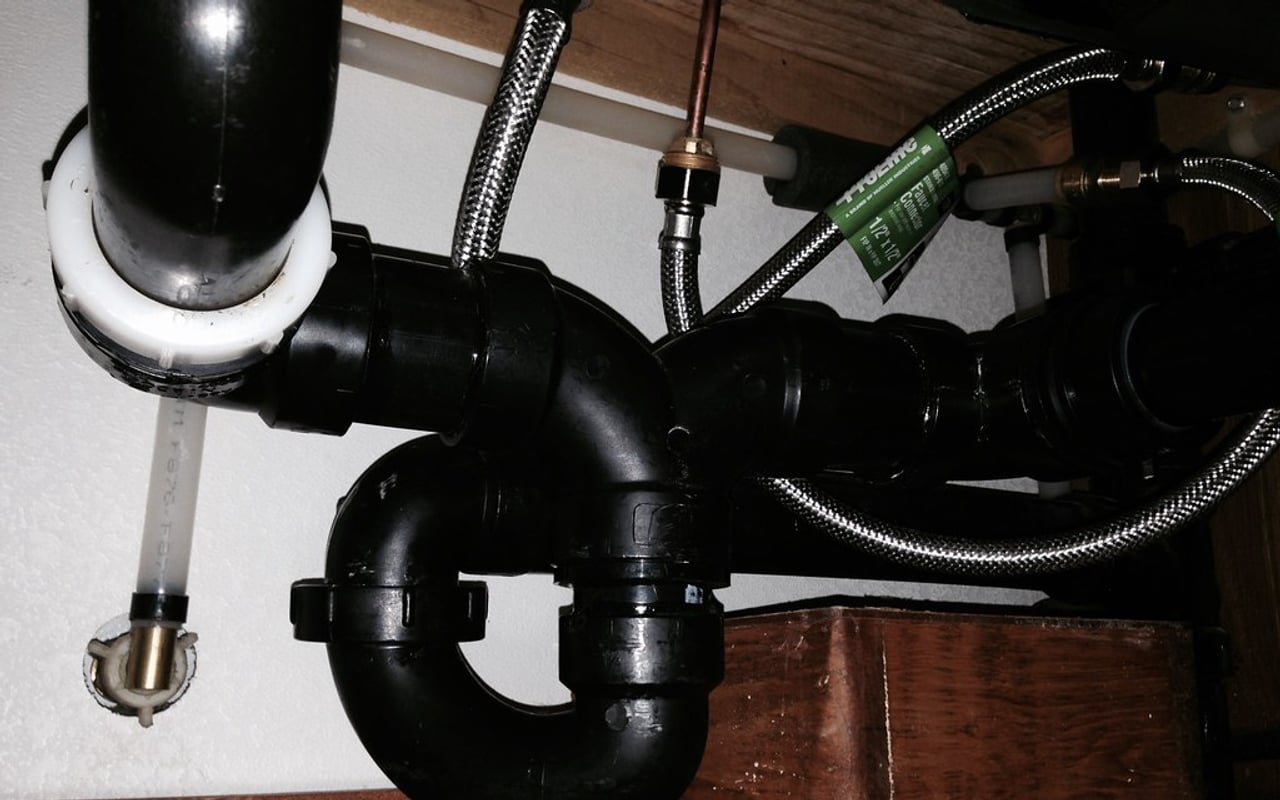
The P-trap - that curved pipe under the sink - is where most clogs first form. It catches heavy debris that sinks to the lowest point.
Place a bucket under the trap. Unscrew the slip nuts by hand or with pliers (wrap the jaws in tape to avoid scratching). Slide the trap off and dump it into the bucket. Clean debris from inside the trap and the drain tailpiece. Reassemble hand-tight plus a quarter turn. Run water to test.
Ninety percent of kitchen sink clogs live in the trap or the first few feet of drain line.
Step 3: A standard cup plunger
Fill the sink basin with enough water to cover the plunger cup. Block the overflow drain opening with a wet rag - if air escapes, the plunger will not build pressure. Pump vigorously ten to fifteen times. The pressure difference breaks up loose clogs and pushes them through the trap.
Do not use a toilet plunger on a kitchen sink. It will not seal against a flat sink drain.
Step 4: Hand auger (drain snake)
If the clog is beyond the trap, a hand auger is the right tool. A 25-foot drum auger with a ¼-inch cable handles most kitchen drain clogs. Feed the cable into the drain while rotating the handle. When you meet resistance, crank to let the tip bore through. Pull back and repeat until the cable runs freely.
If you have a garbage disposal, insert the cable through the disposal drain opening - that gives you a straighter path to the drain line. If the disposal itself is humming, jammed, leaking, or draining slowly, use these safe garbage disposal checks before you assume the branch line is blocked.
Do not use a power auger on a kitchen sink unless you are experienced. The cable can twist and break, or punch through an old cast iron fitting.
What to never try - products and methods that cause damage
Some of these are sold at every hardware store. All of them cause more damage than they fix.
Chemical drain cleaners (Drano, Liquid-Plumr, generics)
Pay attention here. Chemical drain cleaners contain sodium hydroxide (lye) or sulfuric acid. They work by generating heat - exceeding 200°F - inside your pipe. That heat damages your pipes.
Here is what they actually do:
- PVC pipes: The heat softens PVC, warps pipe walls, and weakens glued joints. Repeatedly dosed pipes become brittle and crack.
- Metal pipes: The chemicals accelerate corrosion. Copper drain lines develop pinhole leaks. Galvanized pipes develop internal pitting.
- Garbage disposals: The chemicals attack rubber seals and gaskets. A disposal that survives chemical cleaner may start leaking within months.
- Septic systems: The chemicals kill bacteria that break down solid waste. A single dose sets your tank’s balance back for weeks.
Beyond pipe damage, chemical cleaners cause chemical burns on skin and permanent eye damage. The fumes in an enclosed kitchen cabinet cause respiratory irritation.
If you pour chemicals and the drain does not clear, you now have a pipe full of caustic chemicals that any plumber has to handle before working. Some plumbers refuse the job or charge a hazardous material fee.
There is no scenario where a chemical drain cleaner is the right answer for a kitchen sink clog. Use the trap, the plunger, or the snake instead.
Bleach and wire hangers
Bleach does not dissolve grease or food debris - it just creates a hazardous fume cloud in a confined space. Unbending a wire coat hanger to fish down the drain usually punches a hole through the trap’s slip joint.
Running the disposal to clear a clog
If the drain is blocked, the disposal chamber fills with water. Running it at that point just spins blades through standing water. The clog is downstream - the disposal cannot affect it.
When to call a plumber
Call a plumber if:
- Water backs up into other drains. If running the kitchen sink causes water to appear in the bathroom sink or bathtub, the clog is in the main drain line. These main sewer line red flags need professional equipment.
- The same drain clogs repeatedly. A recurring clog means an underlying problem - partial pipe collapse, deep grease blockage, pipe sag, or root intrusion. Only a sewer camera inspection can diagnose it.
- You have tried the trap, plunger, and hand auger with no success. You need stronger equipment, and these questions to ask before hiring a plumber will help you avoid a vague service call.
- You have an older home with cast iron drain lines. A DIY snake can break through a corroded pipe wall.
- You already used a chemical drain cleaner. Stop. Call a plumber and tell them what you used. Do not add more chemicals. Do not try to snake it - the snake can splash caustic chemicals out of the drain.
How to prevent kitchen sink clogs
Prevention is almost entirely about what you do not put down the drain.
- Never pour grease or oil down the sink. Collect it in a container and throw it in the trash.
- Scrape plates into the trash before rinsing.
- Use a fine-mesh sink strainer to catch tiny particles that settle in the trap.
- Run cold water through the disposal, not hot. Cold keeps fats solid enough to be flushed; hot melts fat, which solidifies downstream.
- Flush the drain with hot water once a week for thirty seconds.
- Baking soda and vinegar monthly. Half a cup of each, let it foam for fifteen minutes, flush with hot water. This is maintenance - it will not fix an existing blockage.
- No flushable wipes. They belong in the trash.
Questions to ask a plumber
- Is the clog in the trap, the branch line, or the main line?
- Will you use a snake or a hydro-jetter, and why?
- What is included in the quoted price - trip charge, diagnostic fee, machine time, first hour? Use this plumbing estimate guide to compare line items.
- If the clog comes back, is there a warranty on the work? Here is what a good plumber warranty usually covers.
- Do you recommend a camera inspection, and what does that cost?
- If the pipe has collapsed, what are the options - spot repair, relining, or full replacement?
Frequently asked questions
Q: Can I use Drano in my kitchen sink if nothing else worked?
No. Chemical drain cleaners damage PVC pipes, corrode metal pipes, and destroy disposal seals. They also do not reliably clear clogs - they may dissolve a thin layer of organic material but leave the blockage intact. Clean the trap or use a plunger instead. If those fail, call a plumber.
Q: Will a garbage disposal unclog my kitchen sink?
No. The disposal sits between the sink and the drain line. If the drain is clogged downstream, the blades cannot affect anything past the outlet. Turn off the disposal and address the clog directly.
Q: How do I know if the clog is in the trap versus deeper in the line?
If removing and cleaning the P-trap restores flow, the clog was in the trap. If the trap is clean and the drain is still blocked, the clog is further down. A hand auger can reach the first ten to fifteen feet. If the auger runs freely and the drain is still blocked, the clog is in the main line.
Q: Is baking soda and vinegar safe for kitchen drain clogs?
Yes, but only as preventative maintenance. It will not clear a fully blocked pipe. Use it monthly to keep a clear drain clear. If the drain is already stopped, go straight to the trap or the plunger.
Q: Why does my kitchen sink smell bad even after the clog is gone?
Usually food debris trapped in the disposal splash guard, sink strainer gasket, or the trap. Remove the trap and clean it thoroughly. If the smell is more like rotten eggs or sewage, it could be a dry P-trap or a sewer gas leak in the wall. This sink sewer gas smell guide explains the difference. A true sewer gas leak needs a plumber.
Q: Can a kitchen sink clog damage my garbage disposal?
Indirectly, yes. Standing water in the disposal chamber can leak past seals if left for days. Chemical cleaners attack rubber gaskets. Clear the clog quickly and avoid chemicals.
Q: When should I call a plumber instead of trying DIY methods?
Call a plumber if water backs up into other drains, if the same clog returns within two weeks, if you have tried the trap and a hand auger with no success, if the sink drains but smells like sewage, or if you have an older home with cast iron drain lines. Water showing up in tubs, showers, or floor drains can point to the main sewer line red flags instead of a sink-only problem. Also call if you already poured chemical cleaner down - do not try to clear it yourself after chemicals.
Bottom line
Kitchen sink clogs are almost always caused by a combination of grease, food debris, and time. The fix is usually simple - clean the trap, plunge it, or run a hand auger. The trap alone solves ninety percent of kitchen clogs.
The expensive mistakes come from using chemical drain cleaners that damage the pipes, from pushing a clog deeper instead of removing it, and from ignoring recurring clogs that point to a bigger problem.
Prevention is straightforward: no grease down the drain, scrape plates before rinsing, use a fine-mesh strainer, and flush with hot water weekly. That routine eliminates most clogs before they start.
And the rule that covers everything: if you have not cleared the clog after cleaning the trap and trying a plunger or hand auger, call a plumber. A professional camera inspection and hydro-jet service will cost less than repairing pipes damaged by chemical drain cleaners.