PEX vs Copper Pipes for Homeowners: Cost and Safety
A straightforward plumber's breakdown of PEX vs copper pipes - cost, lifespan, freeze resistance, fire safety, and which material belongs in your home.
Articles on this site may include sponsored content. If they do, it's labeled clearly - and it still has to answer a real homeowner question. Same bar as everything else here.
PEX vs Copper Pipes, Explained Simply
Every few months a homeowner calls me and says, “My plumber wants to repipe with PEX.” Then they call a second plumber who says, “Copper or nothing - that plastic stuff is junk.”
Both can’t be right - but both are also not entirely wrong.
I’m Chris Lee, and I’ve installed miles of both materials. This guide walks you through what PEX and copper do well, where they fall short, and which one makes sense for your home, your budget, and your local codes. No sales pitch. Just the facts a plumber would tell a friend.
The Quick Answer
PEX is cheaper, faster to install, flexible, freeze-tolerant, and corrosion-proof. Copper is harder, longer-lasting, fire-resistant through rated assemblies, rodent-proof, and fully recyclable.
If you’re building new on a tight budget, PEX is hard to beat. If you’re repiping a multi-story home in a wildfire-prone area, copper may be the safer bet. The real answer depends on where you live, your water quality, and who’s doing the work. If freezing is part of the decision, start with the warning signs in what to do when a pipe may be frozen.
What Is PEX?
PEX stands for cross-linked polyethylene. It’s a flexible plastic tubing that was introduced in Europe in the 1960s and became mainstream in North America around the 1990s. Since then, it’s taken over the residential market. If you are comparing materials because an old line already failed, first make sure you know where the main water shutoff valve is before any repair or repipe starts.
There are three main types - PEX-A, PEX-B, and PEX-C - with PEX-A being the gold standard for residential work.
PEX Pros
- Cost. PEX materials run about $0.50–$1.00 per linear foot. Copper runs $2.00–$4.00 per foot. On a whole-house repipe, that difference alone can save you thousands.
- Flexibility. PEX bends around corners and obstacles. Fewer fittings mean fewer potential leak points and faster installs.
- Freeze tolerance. PEX expands when water freezes inside it, then contracts back when it thaws. It won’t burst the way copper will in a hard freeze.
- Corrosion resistance. PEX doesn’t rust, pit, or corrode. If you have acidic well water, high-chlorine city water, or the common signs of hard water, PEX handles those conditions better than copper.
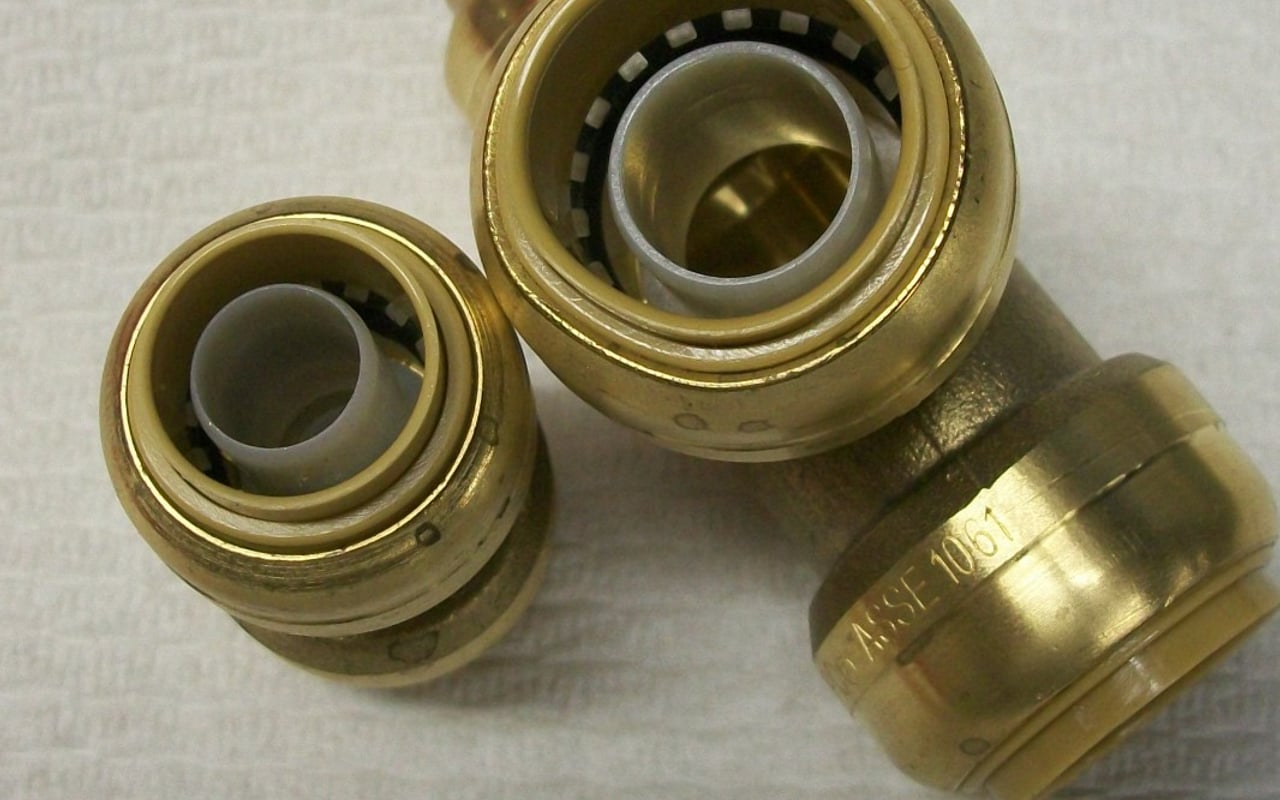
- No soldering. PEX connections use crimp rings, cinch clamps, or push-fit fittings. No open flames, no lead solder concerns, and no fire risk during installation.
PEX Cons
- UV sensitivity. PEX degrades in direct sunlight. It must be kept indoors or covered. You cannot run it exposed on the exterior of a building.
- Rodent vulnerability. Mice and rats will chew through PEX. Copper stops them cold. If you have an active rodent problem, PEX in the walls is a risk.
- Not recyclable. At end of life, PEX goes to the landfill. Copper gets recycled indefinitely.
- Fire concern in certain applications. This one deserves its own section below.
PEX Lifespan
Manufacturers typically warranty PEX for 25 years. With good water quality and proper installation, you’ll likely get 40–50 years. But that warranty number matters if you’re selling your home - some buyers’ agents will flag it.
What Is Copper?
Copper has been the standard for residential plumbing in North America for nearly a century. It’s rigid, durable, and well-understood by every licensed plumber.
Two main types: Type M (thinner wall, lighter duty, cheaper) and Type L (medium wall, standard for residential). Type K (thickest wall) is used for underground and commercial work.
Copper Pros
- Longevity. Copper routinely lasts 50–80 years. I’ve pulled copper pipe out of 100-year-old buildings that was still in decent shape.
- Fire safety through rated assemblies. When copper passes through a fire-rated wall or floor-ceiling assembly, it doesn’t burn or melt. PEX will melt and potentially create a path for smoke and flames. Building codes in many areas require firestopping around plastic pipe penetrations in rated assemblies.
- Rodent-proof. Copper is hard. Rodents can’t chew through it.
- Recyclable. Nearly 100% of scrap copper gets recycled. It retains value at end of life.
- Rigid and stable. Copper doesn’t sag between supports. Long horizontal runs look clean and stay put.
- UV resistant. You can run copper outside, in crawlspaces with exposed sections, and in attics without worrying about sunlight damage.
Copper Cons
- Cost. Material plus labor typically runs 2–3x more than PEX for the same job.
- Labor-intensive. Copper requires cutting, fitting, fluxing, soldering (or press fittings), and careful support. It takes skill and time.
- Corrosion. In acidic water (pH below 6.5) or water with high chloride levels, copper can pit and develop pin-hole leaks over time. If water treatment is part of the plan, compare water softeners, filters, and conditioners before assuming pipe material alone fixes the problem.
- Freeze damage. Copper doesn’t flex. When water freezes and expands inside a copper pipe, the pipe splits. Period.
- Thermal conductivity. Copper pipes can sweat in humid conditions, and they transfer heat (and noise) more than PEX does.
Copper Lifespan
Copper pipes in normal municipal water conditions last 50 years or more. In aggressive water conditions, you might see pin-hole leaks starting around year 15–20. Water chemistry matters a lot. If your fixtures are staining, scaling, or clogging, the plain-English guide to whole-house filtration explains when water treatment changes the plumbing conversation.
Head-to-Head: The Key Comparisons
Cost
| Factor | PEX | Copper |
|---|---|---|
| Material per ft (1/2”) | $0.50–$1.00 | $2.00–$4.00 |
| Labor (whole house) | 1–2 days | 2–4 days |
| Total (1,500 sq ft home) | $1,500–$3,000 | $4,000–$8,000+ |
These are rough numbers. I’ve seen PEX repipes come in at under $1,500 on a small ranch, and copper jobs push past $12,000 on a two-story with difficult access. Get at least three written quotes with scope of work included, then use how to read a plumbing estimate to compare the material, access, and labor assumptions.
Freeze Protection
This is where PEX wins decisively. PEX expands roughly 1.5 times its diameter before rupturing. Copper has zero give. If your home is in a climate where pipes can freeze - and especially if you have pipes running through uninsulated crawlspaces or attics - PEX is the safer play.
Important: PEX is freeze-tolerant, not freeze-proof. Extreme or prolonged freezing can still cause PEX fittings to fail or create pinhole leaks. But it dramatically reduces the odds of a catastrophic burst.
Water Quality
Both materials deliver safe drinking water when properly installed. Key differences:
- Copper can leach small amounts of copper into water, especially if the water sits in the pipes for hours. This rarely reaches harmful levels, but can cause a metallic taste. People with Wilson’s disease (copper accumulation disorder) should consult their doctor.
- PEX has had some concerns about chemical leaching (VOCs) in the first few weeks after installation. Modern PEX is certified by NSF/ANSI 61 for potable water. Flushing the system for 15–20 minutes after installation is standard practice.
- Copper is antimicrobial. PEX is not.
Noise
Copper pipes are louder. You’ll hear water hammer, thermal expansion creaking, and rushing water more clearly through copper. PEX dampens sound because the material itself absorbs vibration. If the bigger issue is weak flow at fixtures, use the guide to low water pressure causes before blaming the pipe material.
Installation Access
If your house has tight crawlspaces, finished basements with complex framing, or retrofits where you’re fishing pipe through existing walls, PEX’s flexibility is a massive advantage. Copper requires cutting access holes and installing more fittings. On retrofit jobs, PEX can cut labor time in half.
Plumbing Safety: The PEX Fire Risk You Need to Know
This is the issue that doesn’t get talked about enough at the supply house counter.
PEX is plastic. Plastic burns and melts.
In a residential fire, PEX exposed to direct flame or high radiant heat fails in minutes. Once it melts through, it creates an opening in the wall or ceiling that can accelerate the spread of smoke and fire. Copper maintains its integrity at temperatures well above what a structure fire generates - it won’t burn, melt, or create a path for fire.
Where This Matters Most
- Multi-story homes. Fire-rated floor-ceiling assemblies are designed to contain fire for a specific duration (usually 1 hour). Running PEX through these without proper firestopping violates most building codes.
- Fire-rated walls. Townhouses, condos, and attached homes have fire-rated party walls. Plastic pipe penetrations must use listed firestop systems (intumescent wraps or collars that seal the opening in a fire).
- Wildfire-prone areas. Homes in California, Colorado, Oregon, and other Western states may have local amendments requiring non-combustible piping (copper) in exterior walls and attics. Check with your building department.
- Commercial and multi-family. The International Building Code (IBC) restricts combustible piping in buildings above certain heights and occupancy classifications.
What to do: If you’re building or repiping a single-family home on a slab, PEX is generally fine. For multi-story, townhouses with shared walls, or wildfire zones, ask about firestopping - and consider copper for those critical penetrations.
When to Pick PEX
- You’re on a tight budget and need to maximize value
- You live in a freeze-prone climate
- The repipe involves complicated access (crawlspaces, finished walls)
- Your water is acidic or high in chlorine
- You’re building a single-story home on a slab
- You want a fast install with fewer leak-prone joints
When to Pick Copper
- You’re in a multi-story building with fire-rated assemblies
- You live in a wildfire zone or high-fire-risk area
- You have an active rodent problem
- You want a 50+ year pipe with no plastic in the walls
- You value recyclability and environmental life-cycle impact
- You’re willing to pay more for proven longevity
- Exposed pipe runs where UV or physical damage is a concern
What About PEX-AL-PEX?
PEX-AL-PEX sandwiches a layer of aluminum between two layers of PEX. It holds bends better than standard PEX and has modestly better fire resistance. It’s popular for radiant heating systems, but for general potable water, standard PEX is more common and much cheaper.
FAQs
1. Does PEX affect water taste?
Some homeowners notice a slight “plastic” taste in the first few weeks from VOCs that off-gas from new PEX. Flushing the system after installation eliminates most of it. Copper can add a metallic taste if water sits in pipes overnight. Both are safe to code - a point-of-use filter handles taste either way.
2. Can you mix PEX and copper in the same system?
Yes, absolutely. Plumbers do this routinely. The connection requires a transition fitting (brass or bronze) that connects PEX to copper. Common setups use copper for the first 18 inches off the water heater (where heat is highest), then transition to PEX for the rest of the run. This is also a good strategy for fire-rated walls - copper on the critical path, PEX everywhere else.
3. Is PEX safe for hot water?
Yes. PEX is rated for continuous use at temperatures up to 180°F and peak temperatures up to 200°F. Residential water heaters are typically set at 120–140°F, well within PEX’s operating range. The one exception: the first 18 inches of pipe leaving the water heater. Many codes require copper or brass for this section because of the extreme heat and turbulence near the outlet.
4. What type of PEX is best for residential plumbing?
PEX-A is the most flexible, has the best freeze-expansion memory, and uses the largest internal diameter. It’s the preferred choice for most residential plumbers. PEX-B is slightly stiffer and a bit cheaper. The difference is marginal. What matters more is a clean install with the right fittings.
5. How long does a PEX repipe last compared to copper?
A quality PEX installation lasts 25–40 years. Copper routinely lasts 50–80 years in neutral water. If you’re in your forever home, copper’s longer lifespan may justify the higher cost. If you plan to move within 15 years, PEX is the more practical choice.
6. Will PEX pipes burst if they freeze?
PEX is freeze-tolerant, not freeze-proof. It expands and contracts better than any rigid pipe, so it’s far less likely to burst in a freeze. But extreme or prolonged freezing can still cause fittings to separate or create pinhole cracks. If you live where sub-freezing temps are common and pipes run through uninsulated spaces, PEX is still the best choice - but insulate regardless.
7. Is copper pipe worth the extra cost?
It depends. If you need fire-rated assemblies, if rodents are a known problem, or if you’re building a home you’ll live in for 40+ years, copper is worth every penny. If you’re budget-conscious, need freeze protection, or have complex retrofitting, PEX delivers 90% of the performance at half the cost. There’s no universal right answer - only the right answer for your house.
Bottom Line
PEX and copper are both excellent plumbing materials. The debate between them has more to do with the specific conditions of your home than any inherent superiority of one over the other.
Here’s the honest take from someone who’s installed both in hundreds of homes: PEX wins on cost, speed, and freeze protection. Copper wins on longevity, fire safety, and rodent resistance. Neither choice is wrong - but one choice is better for your situation.
Before you sign a repipe contract, get three quotes. Ask what they recommend and why. Ask about firestopping requirements, local code amendments, their experience with each material, and what the workmanship warranty covers. The checklist of questions to ask before hiring a plumber and the guide to plumber warranty coverage will help you separate a real recommendation from a sales preference.
And if you live in a multi-story building or a wildfire-prone area, pay close attention to the fire safety section above. That conversation alone could save your home.