Main Sewer Line Red Flags: Early Warning Signs at Home
Learn the main sewer line red flags homeowners should not ignore, from slow drains and sewer gas smells to backups, yard leaks, and when to call a plumber.
Articles on this site may include sponsored content. If they do, it's labeled clearly — and it still has to answer a real homeowner question. Same bar as everything else here.
Main Sewer Line Red Flags Homeowners Should Watch For
The main sewer line carries everything your house drains — toilets, sinks, showers, washing machine — out to the city sewer or septic tank. When it fails, your entire plumbing system stops at once. It is not like a single clogged sink you can clear in ten minutes, and it does not always announce itself with a dramatic flood.
I have seen main line problems show up as a faint smell in the basement, a patch of unnaturally green grass, or a slow drain everyone ignores until the backup hits during a holiday dinner. This guide covers the red flags that mean your main sewer line needs attention, the safety risks — especially sewer gas — and when to call a licensed plumber.
Sewer gas and sewage backups present real health and safety risks. If you smell rotten eggs or sewage inside your house, open windows, get everyone out of the affected area, and call a plumber immediately.
How to tell if it is the main line versus one fixture
The quickest test costs nothing. Run the bathroom faucet at full flow for thirty seconds. While it is running, flush the toilet and listen. If you hear gurgling from the shower drain, or if water rises in the toilet bowl after flushing, the main line is slow or blocked. If only one sink is slow and nothing else reacts when you use it, the clog is local to that fixture. If the pattern is still unclear, use the fixture-by-fixture checks in Slow Drain or Main Sewer Line Problem? before you assume the worst.
| Symptom | Likely Cause |
|---|---|
| Single sink slow, everything else fine | Local clog in that fixture’s trap or branch |
| Multiple drains slow on the same floor | Blockage in the branch line serving that floor |
| Drains on different floors slow or backing up | Main sewer line blockage downstream |
| Water backs up into the lowest drain first | Main line is fully blocked |
If water is backing up into a basement floor drain or a ground-floor shower, stop using water in the house and call a plumber.
Red flag #1: Multiple drains slow or backing up
This is the most reliable early warning sign. A main line blockage affects every fixture that drains into it. If flushing the toilet makes the shower drain gurgle, or running the washing machine makes water appear in the basement floor drain, the main line is blocked downstream of where those branches connect.
If you see gray or brown water rising in a basement floor drain, the main line is fully blocked. Stop using all water, open windows, and call a plumber.
Red flag #2: Sewer gas smell inside the house
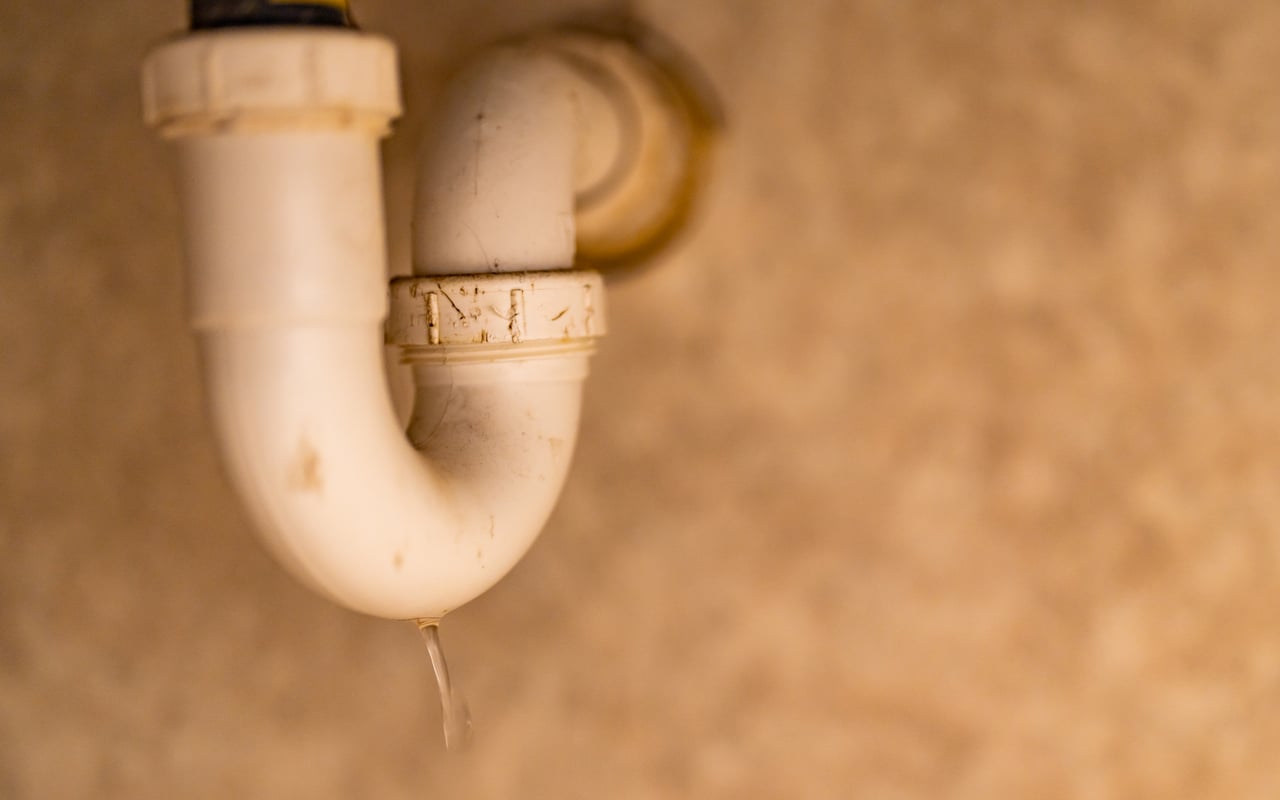
Sewer gas is a mixture of gases from decomposing waste. The compound you smell is hydrogen sulfide — rotten eggs. Your plumbing normally keeps it out with P-traps, the U-shaped pipes under every fixture that hold standing water as a seal.
When the main line is blocked, two things happen:
- Pressure builds up. Wastewater pushes air ahead of it, forcing past the P-trap seal and bringing sewer gas with it.
- The P-trap gets siphoned empty. A partial blockage can suck the water out of a trap, letting gas flow freely into your home.
What to do: Do not light matches, candles, or lighters — sewer gas contains methane, which is flammable. Open windows. Pour a bucket of water down every basement floor drain (dry P-traps are a common cause). If the smell is isolated to one sink, compare it against the dry-trap and venting checks in Why Your Sink Smells Like Sewer Gas. If the smell persists after watering the traps, the problem is in the main line.
Call a plumber immediately if the smell is strong, if anyone has headache, nausea, or dizziness, or if it does not clear after ventilating.
Red flag #3: Gurgling sounds from drains
Gurgling is the sound of air being forced through a P-trap. It happens when the drain line is partially blocked and air pressure in the pipe is changing rapidly.
A gurgling drain is rarely an emergency, but it is a reliable early warning that the main line is beginning to clog. If you flush a toilet and hear gurgling from the shower drain, the blockage is downstream of both fixtures. If gurgling happens every time the washing machine drains, the main line is narrowed enough that a large surge of water pushes air back through the nearest open trap. If the plumber says the drain line is clear, What Plumbers Mean by Venting explains the air-pressure side of the system.
Note the pattern — which fixtures and when — and tell the plumber.
Red flag #4: Sewage backup in the lowest drain
Gray or brown water — sometimes with solid waste — rising through a basement floor drain or ground-floor shower means the main line is completely blocked. Wastewater from every fixture above has nowhere to go but the lowest point in your house.
This is a health hazard. Sewage contains bacteria, viruses, and parasites. Do not walk through it or try to clean it with household products. Keep children and pets away.
Immediate steps:
- Stop using all water. No flushing, no showers, no laundry.
- Turn off the main shutoff valve if sewage is actively rising.
- Open windows for ventilation.
- Call a licensed plumber with main line equipment.
Do not use chemical drain cleaners — the pipe is full of standing sewage and the chemicals will not reach the blockage. If you are not sure where the valve is, How to Find Your Main Water Shutoff Valve is worth reading before an emergency, not during one.
Red flag #5: Lush green patches in the yard
A cracked pipe, separated joint, or root intrusion leaks wastewater into the soil, fertilizing the grass above it. The result: a patch of grass that is noticeably greener and taller than the rest of the lawn, often along the sewer line path from the house to the street or septic tank.
Other outdoor signs: soft, spongy ground, a depression or sinkhole in the lawn, a foul smell outdoors near the sewer line, and unusual insect or rodent activity.
What to do: Do not dig. Call a plumber for a camera inspection. They can locate the leak from inside the pipe and dig a small access hole at the exact spot instead of trenching your entire yard. If you are not sure whether a camera is worth the fee, Sewer Camera Inspection: When It Is Worth the Cost explains the situations where it prevents guesswork.
Red flag #6: Foundation cracks near the sewer line
A broken sewer line that has been leaking for months can saturate the soil around your foundation. In clay soils, constant moisture causes the ground to shift, leading to foundation cracks, uneven floors, or sticking doors and windows.
This is rare but serious. If you notice foundation cracks on the same side of the house where the sewer line exits, and you have noticed any other red flags, the leak may have been active long enough to affect the soil. The fix may involve both a plumber and a structural engineer.
Red flag #7: Rodents or insects near drains
Rats, mice, cockroaches, and drain flies can enter your home through a damaged sewer line. Rats are strong swimmers and can swim up through a broken pipe into a toilet or floor drain.
If you see a rat in a toilet bowl or find cockroaches near floor drains, call a plumber for a camera inspection before calling an exterminator. If the pipe has a hole, sealing it is the only permanent pest prevention.
Sewer gas safety
Sewer gas deserves respect. Hydrogen sulfide (H₂S) is the compound that makes it smell like rotten eggs. At low concentrations (0.5 to 5 ppm), you can smell it. Above 100 ppm, it deadens your sense of smell — you cannot smell the danger. Above 500 ppm, it causes loss of consciousness and respiratory paralysis.
Sewer gas also contains methane, which is flammable. If it accumulates in a crawlspace or basement, a spark from a water heater pilot light or electrical outlet can ignite it.
Stay safe: Install a carbon monoxide and combustible gas detector in your basement. If you smell sewer gas, do not operate electrical switches or light matches. Ventilate by opening windows and doors. If anyone has a headache, nausea, or difficulty breathing, get them fresh air immediately and call emergency services if symptoms persist.
When to call a plumber
Call a licensed plumber with main line experience if:
- More than one drain is slow or backing up simultaneously
- You smell sewer gas and watering the P-traps does not fix it
- Drains gurgle when other fixtures are used
- Sewage has backed up into any drain
- You notice a green patch or sinking ground in the yard near the sewer line
- You find rodents or insects near floor drains
- The same main line problem has returned within a year
What to expect: The plumber inserts a camera through a cleanout to find the exact cause. A cable auger clears grease or debris. Hydro-jetting scours the pipe clean. If the pipe is damaged, trenchless methods like pipe lining or pipe bursting may be recommended.
If the call happens after hours, read Emergency Plumber Costs and What Changes the Bill so the dispatch fee, equipment charge, and cleanup timing do not surprise you.
Questions to ask a plumber
If this is your first sewer-line service call, start with the broader vetting questions in Questions to Ask Before Hiring a Plumber, then narrow the conversation to the main-line questions below.
- Will you do a camera inspection before quoting a repair?
- Is the blockage in the main line or in a branch?
- What caused it — grease, roots, pipe collapse?
- Does the pipe need snaking, hydro-jetting, or replacement?
- If replacement is needed, what are the trenchless options?
- What is included in the quote — camera fee, machine time, labor, permit?
- What warranty applies to the work?
- If the blockage returns, is there a re-service warranty?
For bigger sewer repairs, compare the answer against How to Read a Plumbing Estimate and Compare Quotes and What a Good Plumber Warranty Usually Covers before you approve excavation or trenchless replacement.
Frequently asked questions
Q: How do I know if I have a main sewer line problem or just a single clogged drain?
Run water in one fixture and watch the others. If flushing the toilet makes the shower gurgle, or running the kitchen sink makes water appear in the basement floor drain, the problem is in the main line. If only one fixture is slow and nothing else reacts, the clog is local to that fixture.
Q: Is sewer gas smell in the house an emergency?
It depends on concentration. A faint smell that goes away after pouring water down floor drains is usually a dry P-trap. A strong, persistent smell — especially with headache, nausea, or dizziness — is a safety hazard. Evacuate, ventilate, and call a plumber. Do not light matches or operate electrical switches.
Q: Can tree roots grow into my main sewer line?
Yes. Tree roots seek moisture and nutrients, and a sewer pipe carries both. Roots enter through loose joints, small cracks, or the pipe’s end connection. Root intrusion is the most common cause of main line blockages in homes with mature trees. A camera inspection will confirm whether roots are the cause.
Q: Will a drain snake clear a main sewer line blockage?
A standard hand auger or small drain snake will not reach a main line blockage, which is typically 30 to 75 feet from the house. Professional main line machines use ½-inch to ¾-inch cable with cutting attachments. Do not attempt to clear a main line with a small hand snake. Call a plumber with proper equipment.
Q: How much does main sewer line repair cost?
Snaking or hydro-jetting a blockage typically costs $200 to $600. Trenchless pipe lining runs $4,000 to $15,000. Full excavation costs $3,000 to $10,000 or more. A camera inspection ($200 to $500) should always come before any repair quote.
Q: Does homeowners insurance cover main sewer line repairs?
Most standard policies exclude sewer line repairs unless the damage is from a covered peril like a fallen tree or freezing. Some insurers offer sewer line coverage as an add-on endorsement. Check your policy and consider adding it if you are on a slab foundation — slab leaks involve breaking concrete to access the pipe.
If water or sewage has already damaged finished space, When a Plumbing Leak Is an Insurance Issue explains the difference between the plumbing repair and the cleanup claim.
Q: What should I do if sewage backs up into my basement?
Stop using all water immediately. Turn off the water at the main shutoff valve if sewage is actively rising. Open windows for ventilation. Keep everyone away from the affected area — sewage is a biohazard. Call a licensed plumber first, then a water damage restoration company if sewage has spread. Do not try to clean it with household products.
Bottom line
Main sewer line problems give you multiple clues before they become emergencies. Slow drains across multiple fixtures, gurgling sounds, sewer gas smells, and lush green grass patches are early warnings that let you call a plumber on your schedule rather than at midnight on a weekend.
The single most important thing you can do as a homeowner is find your main cleanout — that capped pipe near the foundation or in the basement — and keep it accessible. When a plumber arrives for a main line call, the cleanout is their entry point. If it is buried or overgrown, the service call takes longer and costs more.
Sewer gas is not just unpleasant — it is a real safety hazard. Trust your nose. If something smells wrong and watering the traps does not fix it, call a plumber. A camera inspection is a small investment that tells you exactly what is happening in the pipe and eliminates guesswork for both you and the plumber.
You do not need to diagnose the problem yourself. You just need to recognize the red flags and call the right person at the right time.